About the Noma Guide to Fermentation
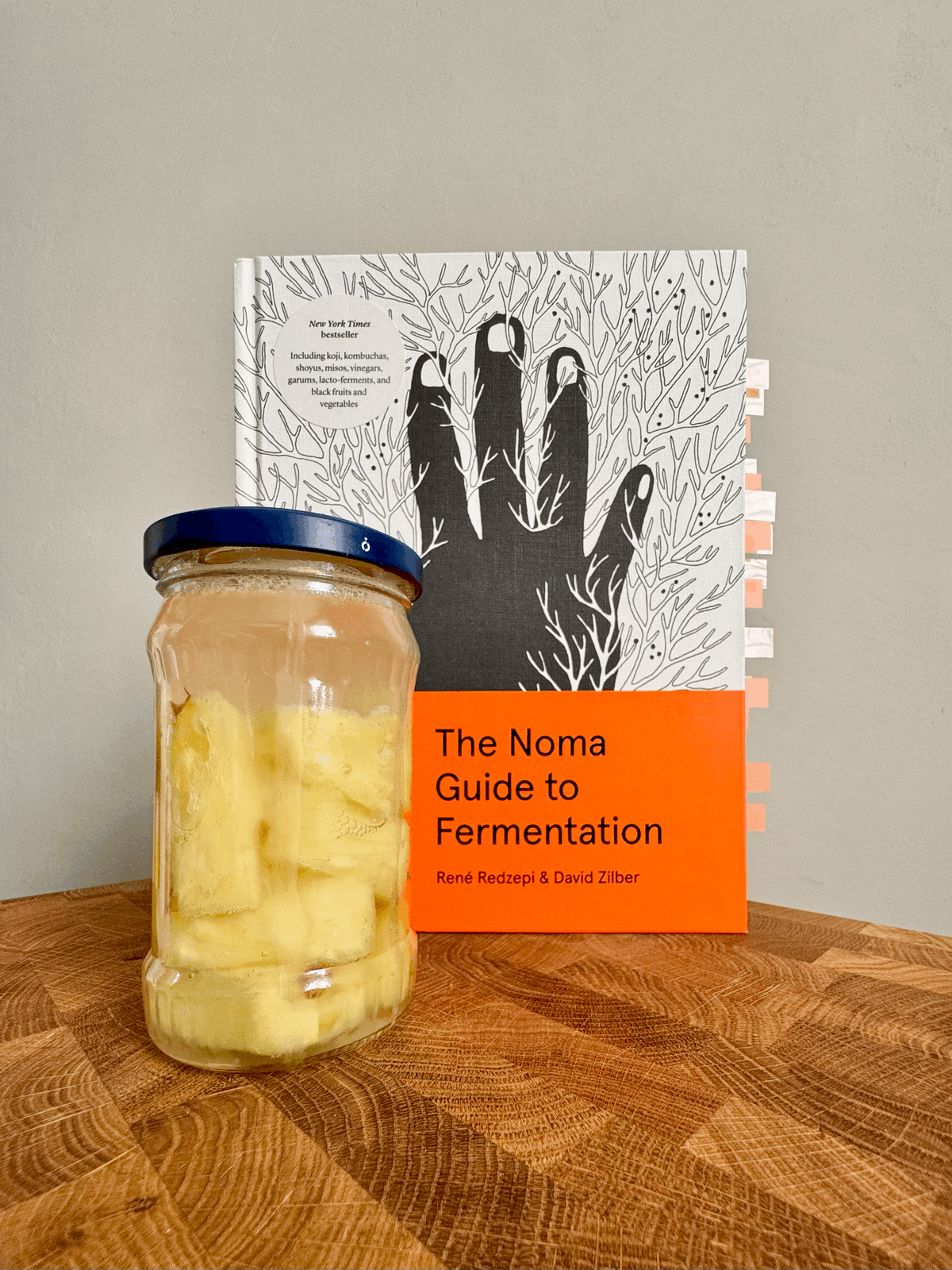
Seeing “fermentation” and “Noma” in the same sentence can be quite intimidating. A week and 400 pages later, here I am with a small jar and a vacuum bag of fermented pineapple, a mild case of probiotic bloating, and an interest in a new skill.
In our country, everyone has a jar of fermented something in the pantry or fridge. Fermenting cucumbers, tomatoes, or watermelon (you heard that right) is a national sport. You rate people by the quality of their ferments. You choose your favorite uncles or aunts by the taste of their fermented vegetables.
Given this legacy, you would assume I had at least a faint idea about fermentation…
Nada. Blank. Zero. I went head first into this experience with zero knowledge.
I finally got myself a copy of this book "The Noma Guide to Fermentation", leafed through a few pages, and got sucked in without even realizing what had happened. You would think a book with “Noma” in its title would include only sophisticated techniques. Well, it does, lots of them, but René Redzepi and David Zilber do an amazing job explaining everything in an accessible way.
They teach you that fermentation, as a concept, is simple. But it can become a complex art form.
This book is your “I know kung fu” moment. I think they actually used this Matrix analogy in the book. I am sure I am about to start fermenting vegetables and fruits simply because it is so easy to create something so healthy. However, I am not sure I will ever go down the path of making koji or soy sauce, but knowing about these techniques and what stands behind them awakens a newfound respect for the product, and an acute interest in tasting and experiencing it from a new perspective.
To wrap this up, I enjoyed the book more than I thought I would, and to think I did not give it many chances to start with. I will keep it handy. It is a must have and a keeper.